Przygotowanie do badania endoskopowego krtani
Wideolaryngoskopia – badanie endoskopowe krtani
Wideolaryngoskopia (wideofaryngolaryngoskopia, VLS, badanie endoskopowe krtani z użyciem szybkiej kamery) to różne nazwy tej samej nieinwazyjnej procedury diagnostycznej. Pozwala ona bardzo dokładnie ocenić gardło i krtań, a także jej czynność głosową (fonacyjną).
Jest to możliwe dzięki zobrazowaniu i analizie szybkich drgań fałdów głosowych („strun głosowych”), niewidocznych w badaniach innymi metodami.
Badanie wykonuje w gabinecie lekarz laryngolog-foniatra.
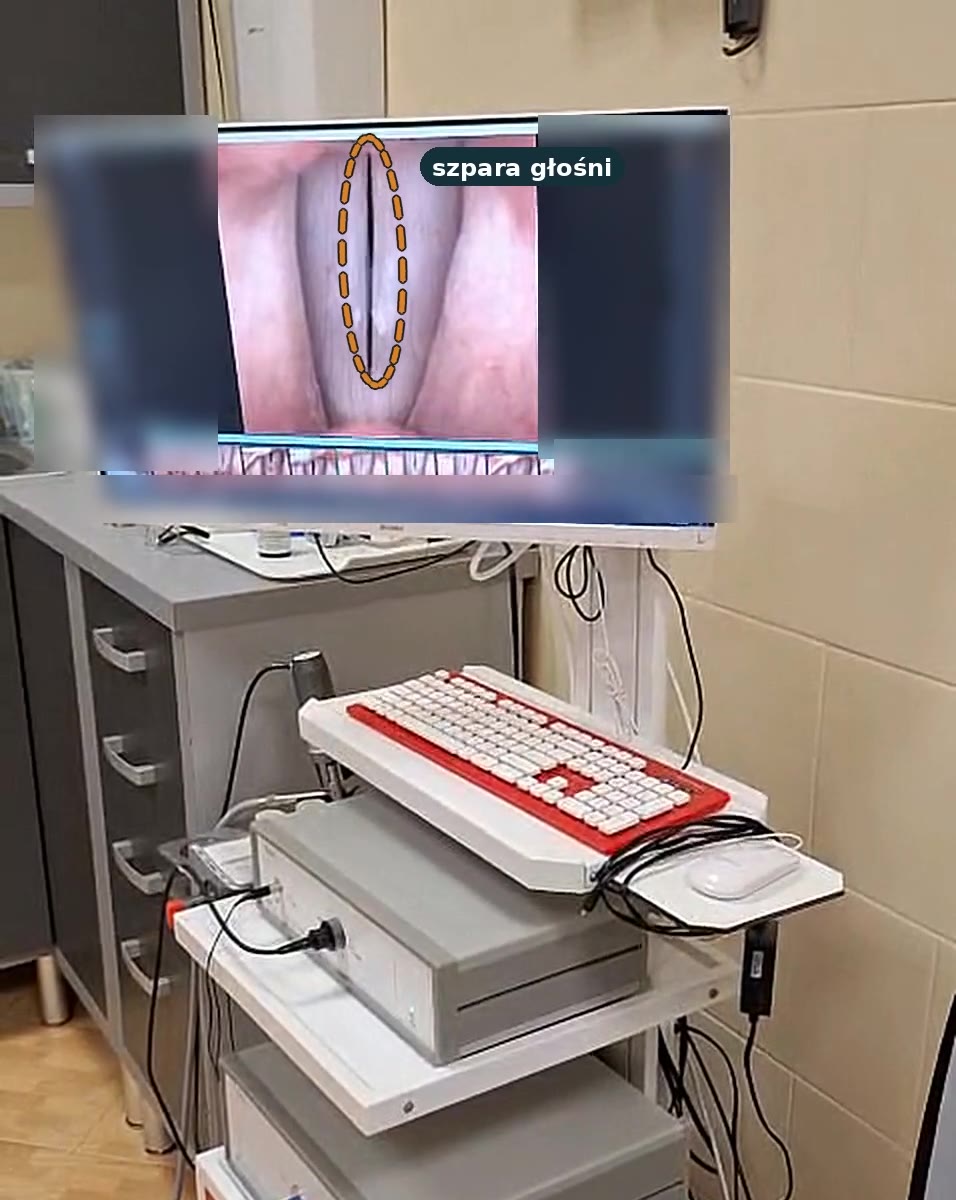
Jak przebiega badanie?
Przygotowanie 1–2 dni przed badaniem
Choć badanie dotyczy tylko gardła i krtani, podrażniony żołądek lub refluks żołądkowo-przełykowy mogą nasilać odruch wymiotny i utrudniać ocenę. Dlatego w tym czasie – a zwłaszcza w ciągu 24 godzin przed wizytą – warto stosować się do poniższych zaleceń.
Ważne: przed badaniem poinformuj lekarza o wszystkich uczuleniach na leki. Jeśli wiesz, że masz wyjątkowo silny odruch wymiotny, powiedz o tym już przy rejestracji – otrzymasz informacje o dodatkowym przygotowaniu.
Co zabrać ze sobą?
Prosimy o przyniesienie dokumentacji medycznej z ostatnich lat:
- karty informacyjne ze szpitali
- wyniki RTG i USG
- wyniki badań histopatologicznych
- konsultacje innych specjalistów
- lista przyjmowanych leków
W dniu badania
U 9 na 10 badanych procedura przebiega bez żadnych problemów i dyskomfortu – a pozostałym można skutecznie pomóc!
Nasofiberoskopia
To kolejne badanie endoskopowe. Pozwala ocenić jamy nosa, ujścia zatok przynosowych, nosogardło (w tym wielkość trzeciego migdałka), wały trąbkowe, gardło i krtań za pomocą cienkiego, giętkiego endoskopu (fiberoskopu). Fiberoskop wprowadza się przez nos, co zapewnia wysoki komfort badania.
Nasofiberoskopia nie wymaga specjalnego przygotowania.
Preparation for laryngeal endoscopy
Videolaryngoscopy – endoscopic examination of the larynx
Videolaryngoscopy (videopharyngolaryngoscopy, VLS, endoscopic examination of the larynx with a high-speed camera) are different names for the same non-invasive diagnostic procedure. It allows a very accurate assessment of the pharynx and larynx, as well as of voice (phonatory) function.
This is possible thanks to imaging and analysing the rapid vibrations of the vocal folds (“vocal cords”), which cannot be seen with other methods.
The examination is performed in the office by an otolaryngologist–phoniatrician.
How is the examination performed?
Preparation 1–2 days before the examination
Although the examination concerns only the throat and larynx, an irritated stomach or gastro-oesophageal reflux can intensify the gag reflex and make the assessment more difficult. Therefore, during this time – and especially within 24 hours before your visit – please follow the advice below.
Important: tell the doctor about any drug allergies before the examination. If you know you have a particularly strong gag reflex, mention it when booking – you will be advised on additional preparation.
What to bring
Please bring your medical documentation from recent years:
- hospital discharge summaries
- X-ray and ultrasound results
- histopathology results
- other specialists’ consultations
- a list of your medications
On the day of the examination
In 9 out of 10 patients the procedure causes no problems or discomfort – and the others can be helped effectively!
Nasofiberoscopy
Another endoscopic examination, which assesses the nasal cavities, the openings of the paranasal sinuses, the nasopharynx (including the size of the adenoids), the torus tubarius, the throat and the larynx using a thin, flexible endoscope (fiberscope). The fiberscope is inserted through the nose, which makes the examination very comfortable.
Nasofiberoscopy does not require any special preparation.